

Kajabi vs Systeme.io in 60 seconds
- Value for money: Systeme.io. It’s affordable costing low as $17 per month with generous usage limits and a strong marketing stack. Doesn’t charge any platform fees. Kajabi’s expensive starting from $179 to $499 per month, plus a 2%-0.5% surcharge fees if you use a third-party payment processor, like Stripe.
- Courses and coaching: Kajabi. Has a more refined online course builder that also supports live classes, quizzes and assessments. Allows you to diversify learning to cohort courses, 1:1 and group coaching without requiring you to use a third-party tool.
- Community: Kajabi. Refined community builder that supports tiered access control and more engagement features like challenges, meetups and leaderboards.
- Funnels and automation: Split. Systeme.io has better funnels with A/B testing, deadline pages, webhooks and a sales pipeline on every plan. Kajabi has stronger automations with multi-branching and integrate well with its product ecosystem.
- Physical products and payment gateways: Systeme.io. Native physical products and nine gateways, against Kajabi’s Shopify workaround and three gateways.
- Bottom line: Choose Kajabi if you want a complete knowledge business platform with stronger online learning tools. Choose Systeme.io if you’re looking for a budget friendly all-in-one marketing platform to grow your digital business.
Kajabi has earned its reputation as one of the top leading all-in-one platforms for creators and knowledge entrepreneurs.
It lets you sell a wide range of digital products including: courses, coaching programs, memberships, downloadables, and communities.
More importantly, it gives you the tools to market and sell those products from the same platform. That way, you won’t have to integrate third-party tools for things like website building, sales funnels, email marketing, automation and payments.
But this convenience comes with a premium price tag starting at $179 per month.
Meanwhile, Systeme.io promises to offer much of the same all-in-one setup at prices that are hard to ignore of as low as $17 per month.
So, what’s the catch?
In this Kajabi vs. Systeme.io comparison, I’ll put both platforms to the test and show you how they compare when it comes to:
- Online course creation
- Website and page building
- Marketing funnels
- Workflow automation
- Email marketing
- Communities and memberships
- Affiliate marketing
- Pricing and value for money
Let’s get into it, shall we?
Kajabi vs Systeme at a glance
Both Kajabi and Systeme are all-in-one digital business platforms for creators, coaches and knowledge entrepreneurs. Though they have a lot in common, after using both tools it’s clear they also have their fair share of differences making them ideal choices for different users and businesses.
Kajabi: The complete platform for education and info businesses
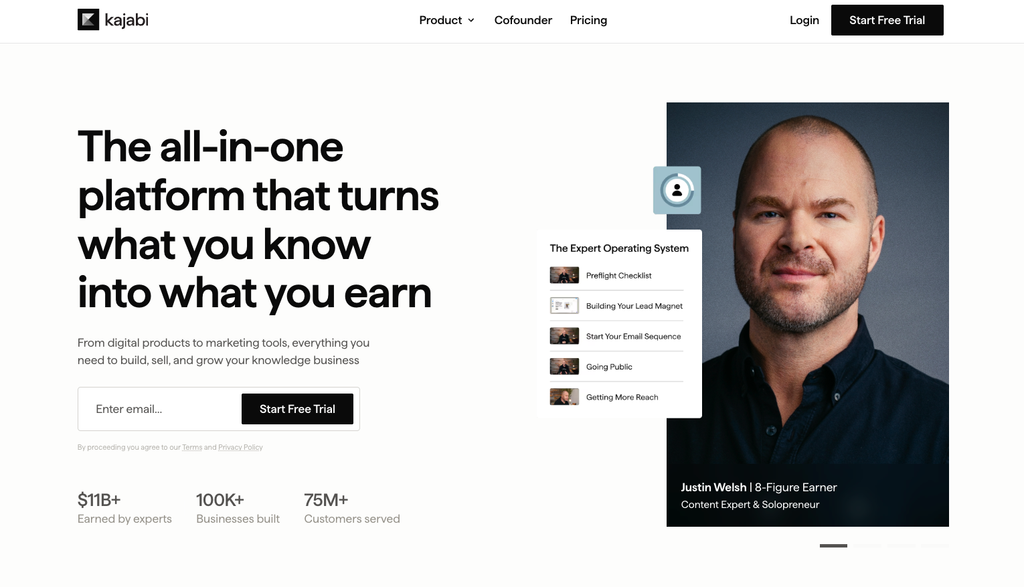
Kajabi is the platform I’d recommend to creators, coaches, and knowledge entrepreneurs that want an all-in-one platform to build courses, coaching, memberships, and community. It gives you a stronger environment for delivering these products while offering an outstanding marketing and sales tools in the same ecosystem.
A lot of all-in-one platforms offer excellent marketing tools but terribly fail when it comes to online learning. Systeme.io is a good example. You get a robust sales funnel builder but weak course creation tools.
Meanwhile, Kajabi offers the best of the two: a great teaching toolset and a solid marketing stack. That way, you will not be forced to use external tools like Thinkific to handle online learning, or Kartra for marketing.
Choose Kajabi if:
- You want to offer knowledge products like: courses, group coaching programs, and live cohorts.
- You want the best combination of course delivery, community, and marketing tools in one platform.
- You’re running an established knowledge business and want software that can grow with you.
- You’re happy to pay more for a platform that’s refined, reliable, and easy to manage over the long term.
👉 Explore Kajabi or read my detailed Kajabi review.
Systeme.io: The affordable online marketing and commerce software for digital businesses.
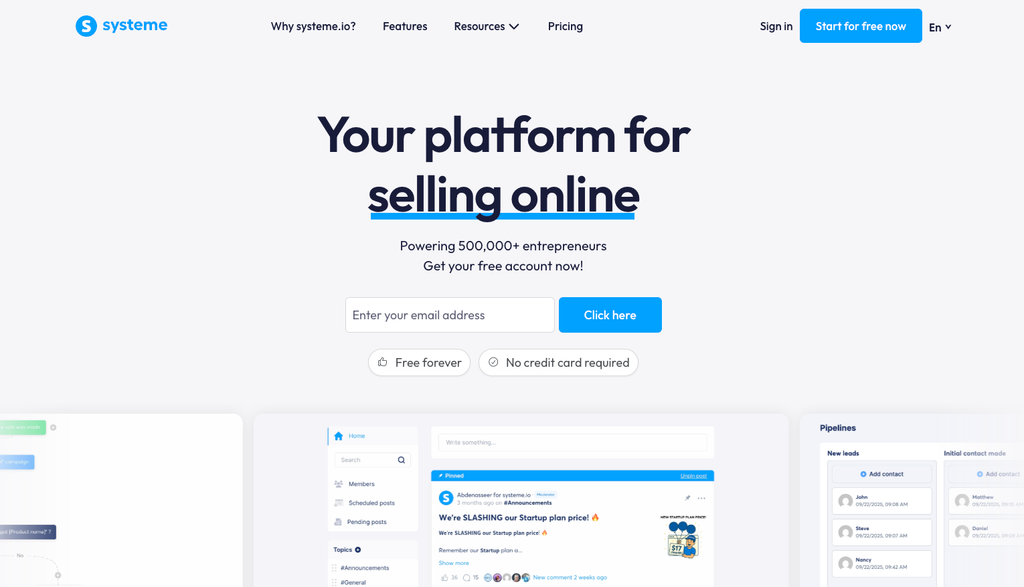
Systeme is the ideal solution if you want a complete marketing software to run your knowledge business without paying the high price tags that usually come with all-in-one platforms.
It offers a strong marketing and commerce tech stack featuring: sales funnels, email marketing, webinars, workflow automation and checkout tools. Though it empowers you to create courses, coaching and community memberships, they aren’t as comprehensive as Kajabi’s.
That said choose Systeme.io if:
- You are validating a new offer and wish to keep software expenses low.
- You want an affordable digital business software without the hefty price tag that comes with solutions like Kajabi and Kartra.
- You intend to sell both physical and digital products using a single platform.
- You want built‐in affiliate management and funnel optimization without relying on external services.
- You manage multiple brands and need features such as sub‐accounts.
- You want to white‐label the platform or incorporate it into your own service offerings.
Kajabi vs Systeme: A quick comparison
| Kajabi | Systeme.io | |
| Free plan | None. 14-day free trial on paid plans. | Permanent free plan with 2,000 contacts, 3 funnels, 1 course, unlimited emails, 0% transaction fees. |
| Products | Courses, coaching, memberships, communities, podcasts, newsletters, and digital downloads. | Courses, memberships, digital downloads, calendar bookings and physical products. |
| Community | More advanced community with access groups, challenges, badges, gamification, live events, and direct messaging. Tightly connected to courses and memberships. | Basic community centered around posts, topics, comments, and member access. Fewer engagement and community-management features. |
| Email marketing | Broadcasts, automated sequences, behavioral triggers, segmentation, and conditional filters. Strong integration with products and customer activity. | Broadcasts, sequences, tags, and a visual workflow builder with conditional paths and branching logic. Unlimited emails on all plans. |
| Funnel builder | Visual funnel builder with 12 blueprints featuring various cases like webinars, product launching e.t.c. Less flexible and has limited conversion optimization tools. | Flexible funnel builder with templates, A/B testing, deadline funnels, and webhooks. |
| Physical products | Not supported and you’ll need to integrate a third-party online store tool like Shopify. | Supported. Sell physical products with built-in shipping and inventory management tools. |
| Student mobile app | Native iOS and Android app. Branded mobile app available on higher-tier plans or as $199/month add-on. | No native student mobile app. Mobile-responsive web access only. |
| Transaction fees | Standard 2.9% + $0.30 on Kajabi Payments. Surcharge if using your own Stripe (2% Basic, 1% Growth, 0.5% Pro). | 0% platform transaction fees on all plans. Standard Stripe processing fees still apply. |
| Payment gateways | Kajabi Payments, Stripe, and PayPal. | Stripe, PayPal, GoCardless, Razorpay, Flutterwave, Mollie, Xendit and other region-specific payment gateways depending on country and availability. |
| Pricing | Basic: $179/month (5 products, 2,500 contacts). Growth: $249/month (50 products, 25,000 contacts). Pro: $499/month (unlimited products, 100,000 contacts). | Free: $0/month (2,000 contacts, 3 funnels, 1 course). Startup: $27/month (5,000 contacts, 10 funnels, 5 courses). Webinar: $47/month (10,000 contacts, 50 funnels, 20 courses). Unlimited: $97/month (unlimited contacts, funnels, and courses). |
| Explore Kajabi | Explore Systeme.io |
Systeme.io vs. Kajabi: An in-depth comparison and my hands-on experience
In this section, I’ll compare Systeme.io and Kajabi in detail, based on my experience using both platforms. I’ll show you where each excels, falls short, and the key differences to consider.
Let’s start with pricing and value for money.
Systeme offers better value for money for small creators and businesses.
Systeme is handsdown more affordable than Kajabi.
Here’s a quick price comparison summary:
| Systeme.io | Kajabi | |
| Free | ✅ | ❌ |
| Entry plan | $17/mo | $179/mo |
| Mid-tier | $47/mo | $249/mo |
| Top tier | $97/mo | $499/mo |
| Transaction fees | 0% | 0.5%–2% |
| Value for money | ⭐⭐⭐⭐⭐ | ⭐⭐⭐⭐ |
| Best for | Small creators & coaches | Established creators, coaches & businesses |
| View Systeme’s pricing | View Kajabi’s pricing |
When you compare what you actually get on each tier, you’ll see that Systeme offers far better value especially for beginners, small creators, and digital entrepreneurs.
Its entry-level paid plan starts at $17 per month.
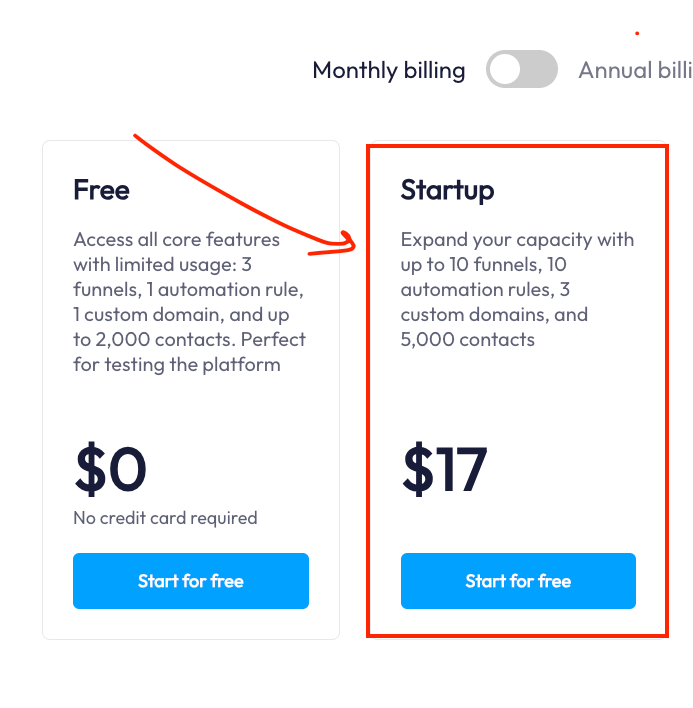
And at that pricing, you get up to 5 courses, 5 communities, and 5,000 contacts.
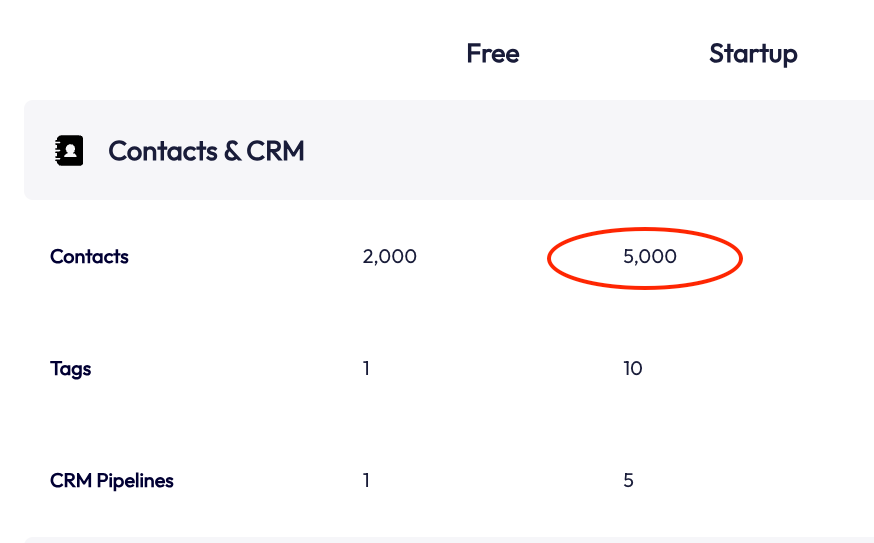
Which is plenty of room for a creator who is launching their first paid product, building an audience, or validating an offer.
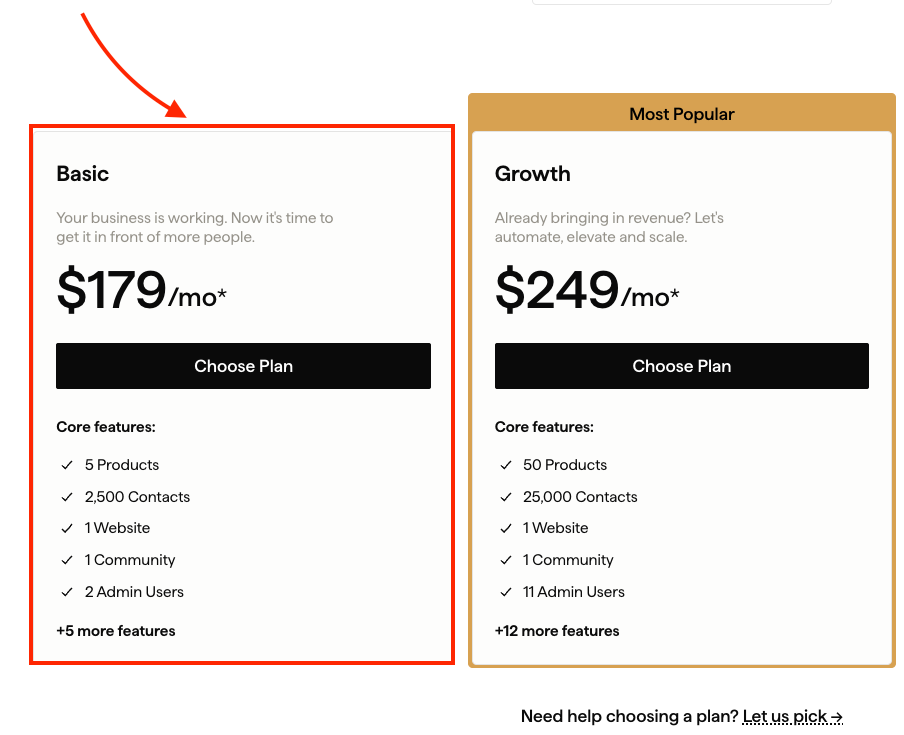
Meanwhile, Kajabi is more expensive and also includes surcharge fees when you use a third payment provider.
Its entry-level plan costs $179 per month and only allows up to 5 products, 1 community and 2,500 contacts.
As you move up the pricing, both Kajabi and Systeme extend their usage limits significantly allowing you to scale without bottlenecks.
But there are still some apparent differences.
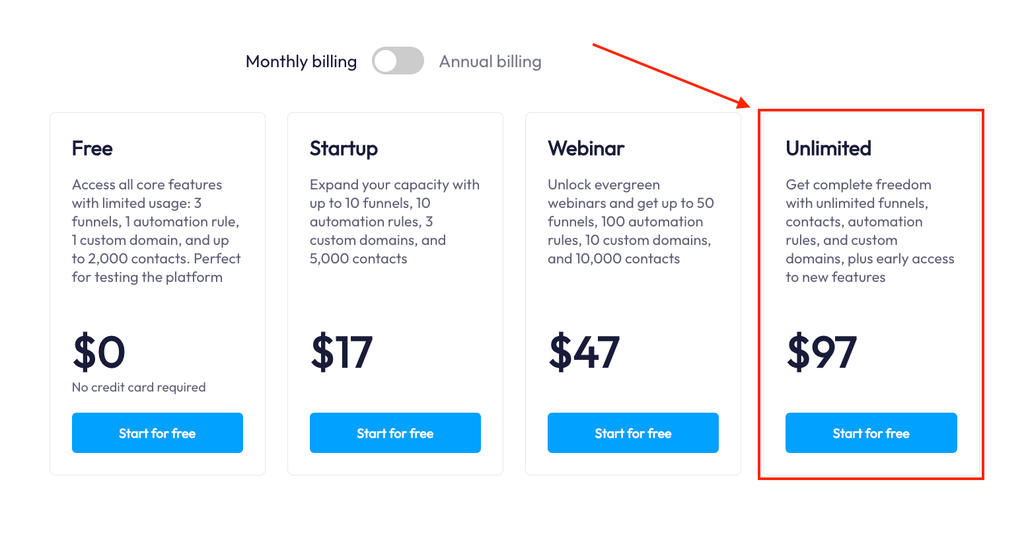
Systeme high-end plan (Unlimited) at $97 plan removes most of the usage limits. You get unlimited courses, contacts, custom domains, websites, subaccounts, calendar bookings, webinars, communities, and more.
Kajabi’s $499 plan also increases its limits. You get unlimited products, 3 communities, 3 websites, and up to 100,000 contacts.
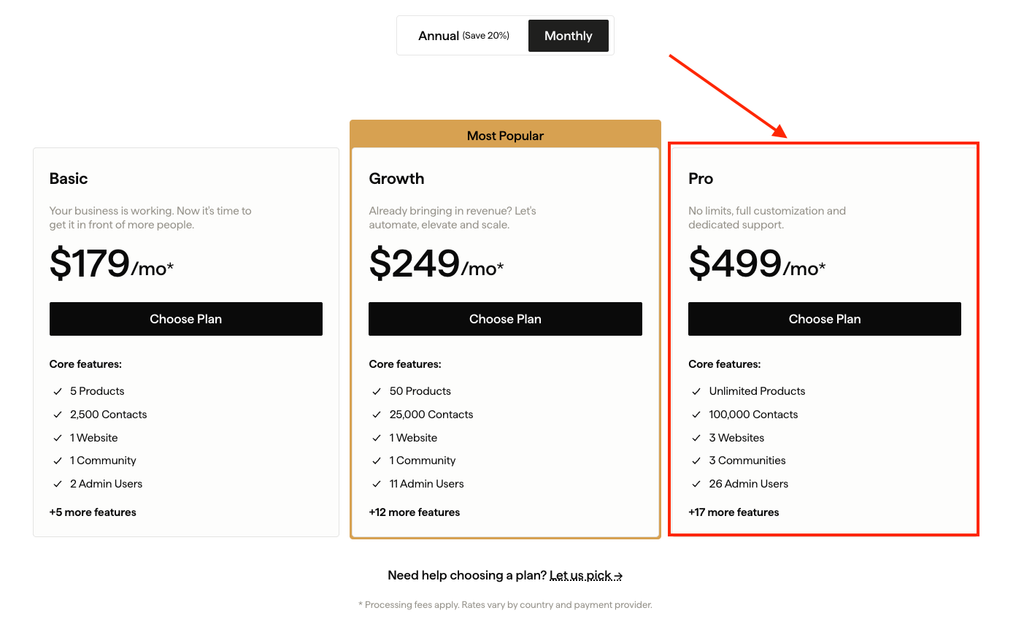
Which is a substantial capacity increase. But you’re still paying X5 as much as Systeme’s highest-priced plan.
Additional reading: Kajabi’s detailed pricing breakdown and the total costs.
Kajabi is the stronger solution for building courses, and cohort-based programs.
Kajabi is handsdown the superior tool for building education and info products.
And it comes down to the experience, and the fact that its online learning tools are more refined and complete than Systeme’s.
Let me show you how:
Kajabi has a beginner-friendly course creation workflow.
It follows a simple setup wizard with clear steps and items guiding you through the process.
Simply, choose whether to create an evergreen or cohort-based course.
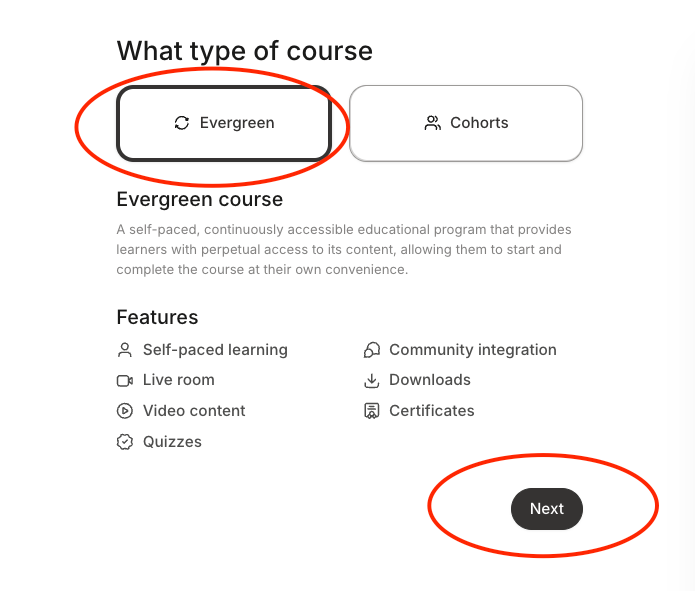
Then add your course title, description, branding and pricing.

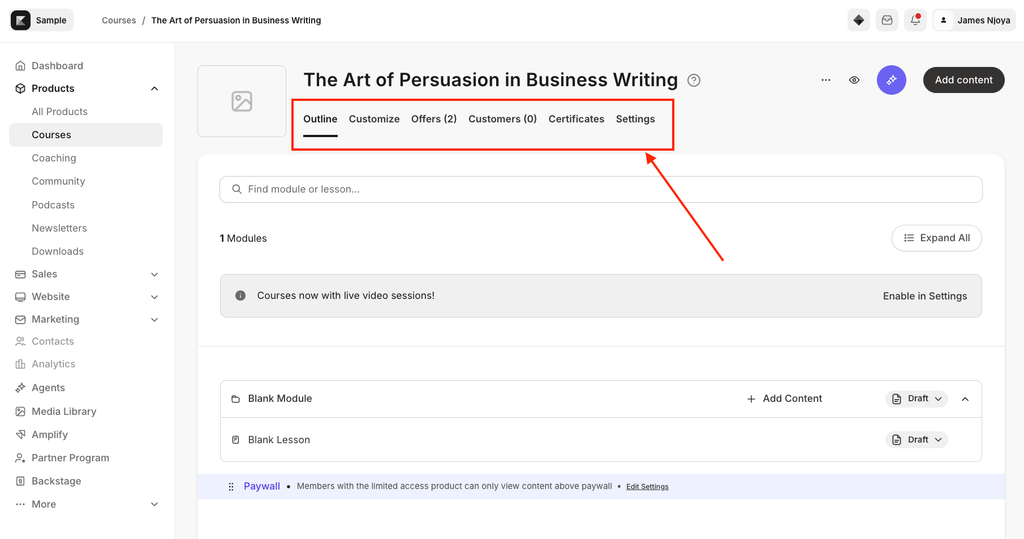
From there, you’ll be able to create your course outline, add content, customize the theme, add the certificate and view students who’ve signed up for the course. All of which you can easily navigate using the top menu present in the builder.
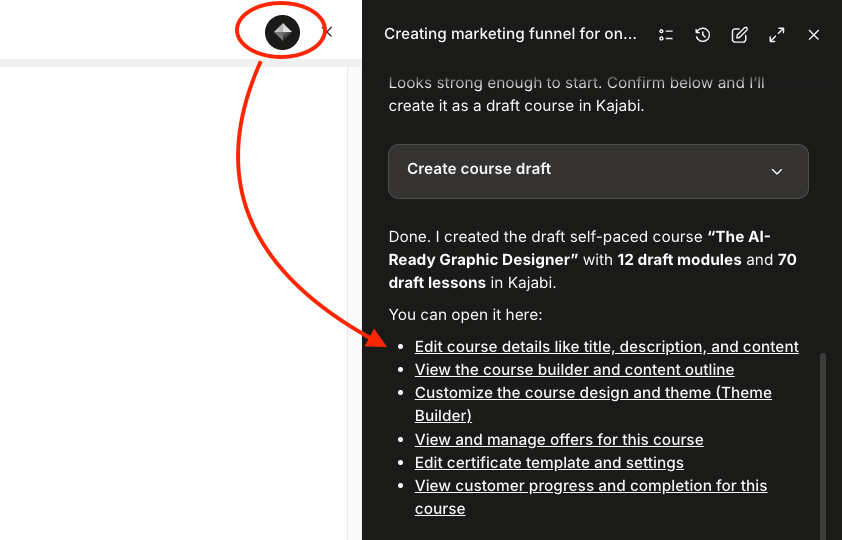
Now, if you don’t want to start from a blank slate, Cofounder, Kajabi’s AI assistant, can generate a first draft of your curriculum structure from a topic, along with sales page, email copy.
Now, I wouldn’t publish any of that as-is. As you’ll want to tweak it, cut most of it, and rewrite the rest until it sounds like you. That’s true of every AI draft you’ll ever get.
But the copy was never the point.
What’s helping you do instead is skip most of the setup process.
For example, I asked Cofounder to create a course outline, sales funnel, email sequence, and related automations for a course, and it configured the pieces together for me. That saved time compared with building the entire workflow from scratch.
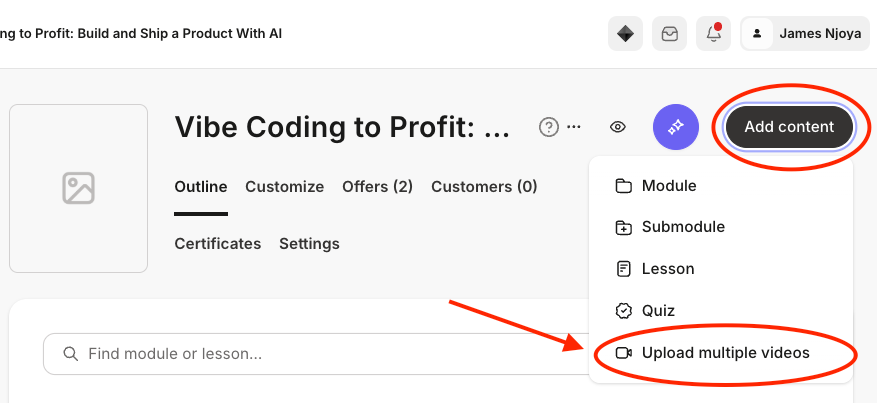
Once your course is set up, you can drag and drop to rearrange modules and lessons and upload lesson videos in bulk, though Kajabi limits individual video uploads to upto 4GB.
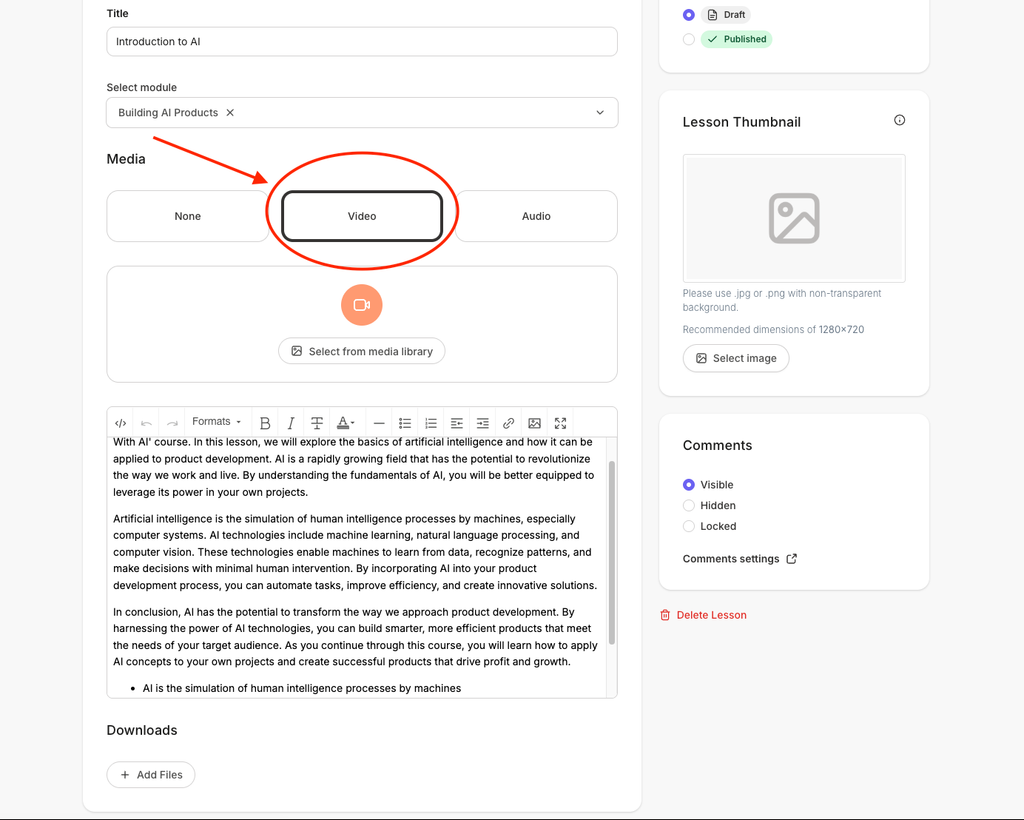
The lesson editor keeps things just as simple. Rather than giving you a full page builder to design every part of the lesson, Kajabi focuses the editor on the essentials: choose your media, add a lesson thumbnail, and write the lesson content using the rich-text editor. There are no layers of layout controls to work through, which makes it easy to get a lesson published.
Meanwhile, Systeme.io takes a different approach. Creating an individual lesson feels more like building a landing page making it unnecessarily tedious to just build a course lesson.

Systeme.io also lacks Kajabi’s generative AI tools for creating a course outline and doesn’t offer some of the same conveniences, such as bulk lesson-material uploads.
Both platforms let you natively host course materials, drip lessons, assess students, and issue course certificates. But Kajabi also supports live learning.
Its native livestreaming tool is built into the course experience, so you can run live classes, Q&As, and workshops alongside your regular course content. You can also record those sessions and repurpose them as lessons, giving you a way to combine live teaching with evergreen content in the same course.

Meanwhile, Systeme.io doesn’t offer an equivalent native live-learning experience.
Besides allowing you to create and sell courses, Kajabi goes further by enabling you to offer cohort-based courses.
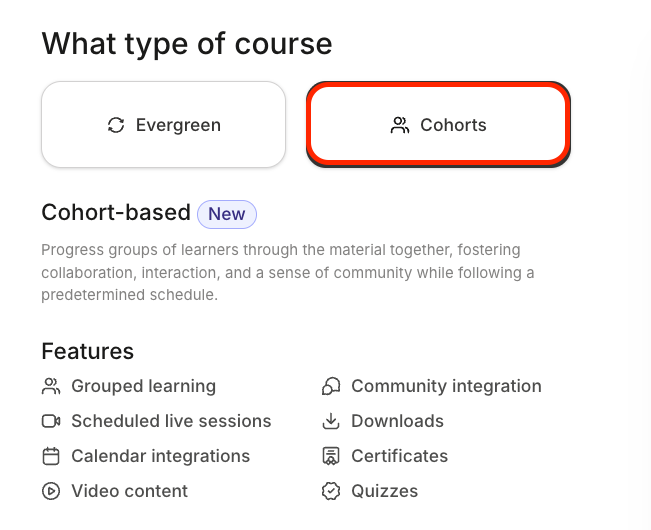
This enables you to deliver time-bound learning experiences where a group of students moves through the material on a shared schedule. Which in turn can boost learning engagement, and completion rates.
However, it’s important to note that this tool is only available on the Growth and Pro plans.
Systeme.io doesn’t offer comparable native cohort-based course functionality, even on its higher-tier plans. If you want to run a cohort-based program on Systeme.io, you’ll need to integrate a few third-party tools for things such as live sessions, and group learning. For example, you could combine Zoom for live classes, and Circle or Discord for community interaction.
Kajabi offers a complete coaching program creation tool while Systeme.io requires you to combine its calendar, automations and Zoom.
Beyond self-paced courses, Kajabi has a dedicated coaching product for running both 1-on-1 and group coaching programs.
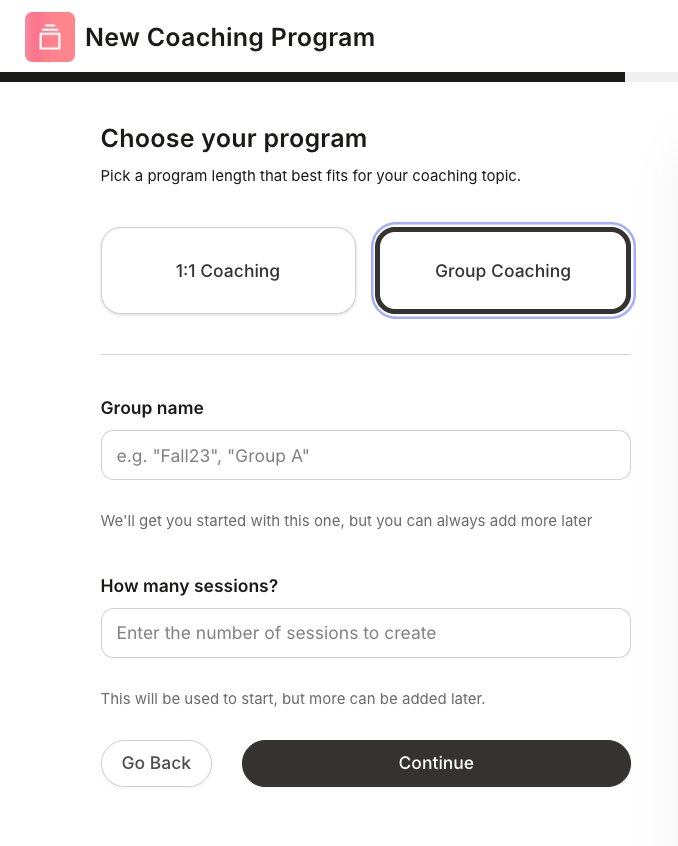
You can structure coaching into a defined program, set milestones and timelines, share resources, schedule sessions, communicate with clients, and manage the coaching experience from the same platform.
Additionally, Kajabi offers native scheduling tool that connects with your ideal calendar including Google, and Outlook. It also supports native livestreaming using Kajabi Live Video allowing you to natively host live sessions.
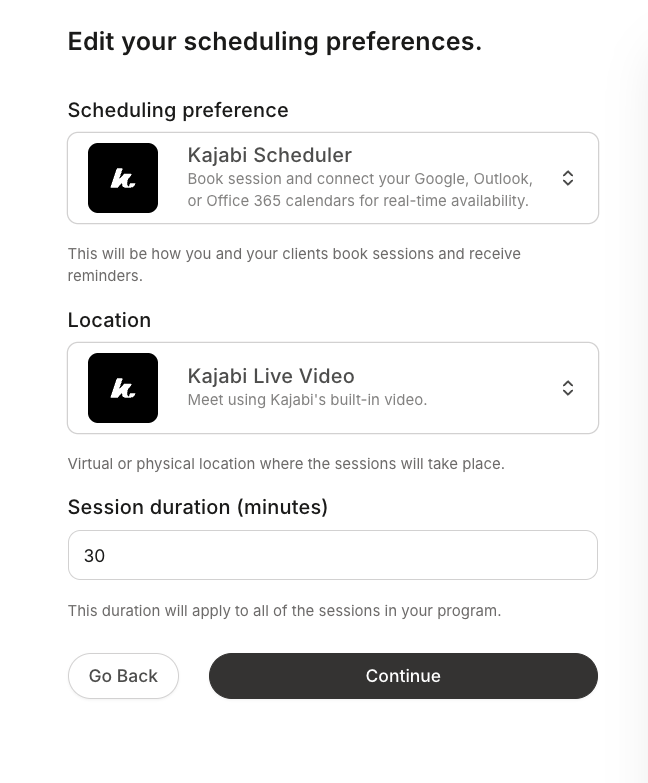
Systeme.io can also support a coaching business, but the workflow is spread across different parts of the platform. You can use its calendar for sessions, but you’ll need to integrate a third party tool such as Zoom to host live videos.
Kajabi is the better solution for building online communities because it offers stronger organization, access control, and member engagement tools.
Kajabi Community has Access Groups which allow you to control which members can access specific areas and experiences within your community.
Using them, you can organize different types of community experiences, including:
- Channels: threaded discussions or group chats for ongoing conversations
- Challenges: one-time or recurring activities designed to drive participation
- Meetups: scheduled community events and gatherings
- Announcements: broadcasts for communicating important updates to members
More importantly, you can use Access Groups to structure your community by creating different sections and give each its own combination of channels, challenges, meetups, and announcements.
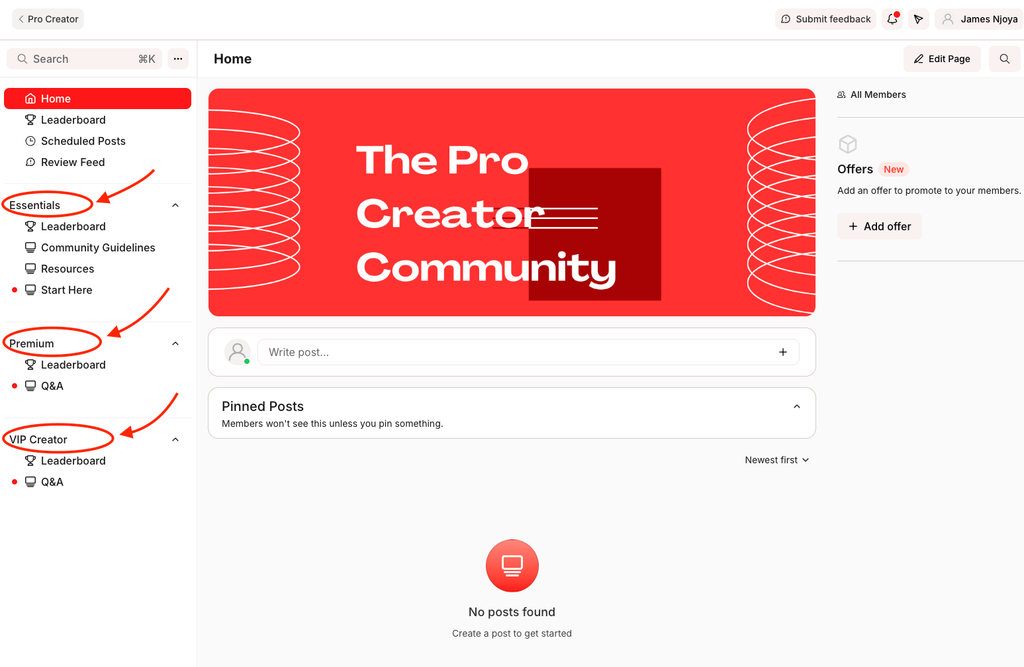
Because Kajabi allows you to create multiple Access Groups within the same Community, you can also create different levels of access for different types of members and connect those access levels to specific offers, such as courses, memberships, cohorts, or coaching programs.
This enables you to build a multi-level community where different members get different experiences based on what they have purchased or been given access to.
For example, you could have a Free Members group with general discussions and announcements, a Course Members group with course-specific discussions and challenges, and a VIP Members group with private channels, exclusive meetups, and coaching. A member can belong to multiple Access Groups, allowing their community experience to expand as they purchase additional offers.
Kajabi also provides more ways to engage members. In addition to threaded discussions and group chats, you can run challenges, schedule live meetups, and use badges and leaderboards to recognize and encourage participation.
Systeme.io covers the basic functionality you would expect from a community forum. You can create public or private communities, organize discussions by topic, schedule posts, allow comments, upload files and voice memos, and control member access.
That said, compared to Kajabi, in Systeme it’s hard to build richer community experiences or create things like access levels.
Systeme.io has the stronger drag-and-drop website editor, with more flexible design controls and better-looking templates out of the box.
When it comes to building a complete website both Kajabi and Systeme.io give you the essential tools you need, including pre-built themes and drag-and-drop page builders.
However, after building websites with both platforms, I found Systeme.io to be the stronger option overall, because it gives you more design flexibility without having to write code.
First, let’s see how both platforms’ themes collection compare.
Both platforms give you a selection of pre-built website themes to get started.
Kajabi offers 11 and an additional 6 legacy themes.
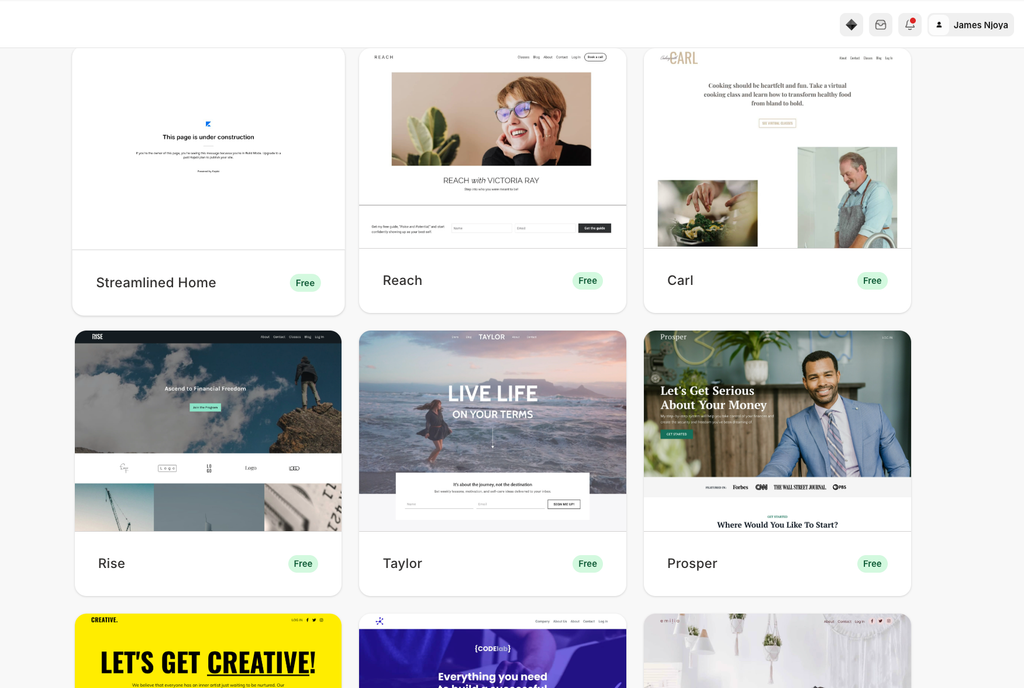
The themes look okay: but not outstanding. That said, it’ll take you a lot of effort and time to customize them to feel unique and to your brand.
Meanwhile, Systeme gives you 7 themes.

But I liked Systeme’s templates better because they look nicer and a bit more modern out of the box. Still they don’t look outstanding either.
Both platforms use drag-and-drop editors to build pages, but Systeme.io gives you more layout control and design freedom.
You can build with rows and columns, move elements around the canvas, and control things like padding, margins, backgrounds, and spacing.
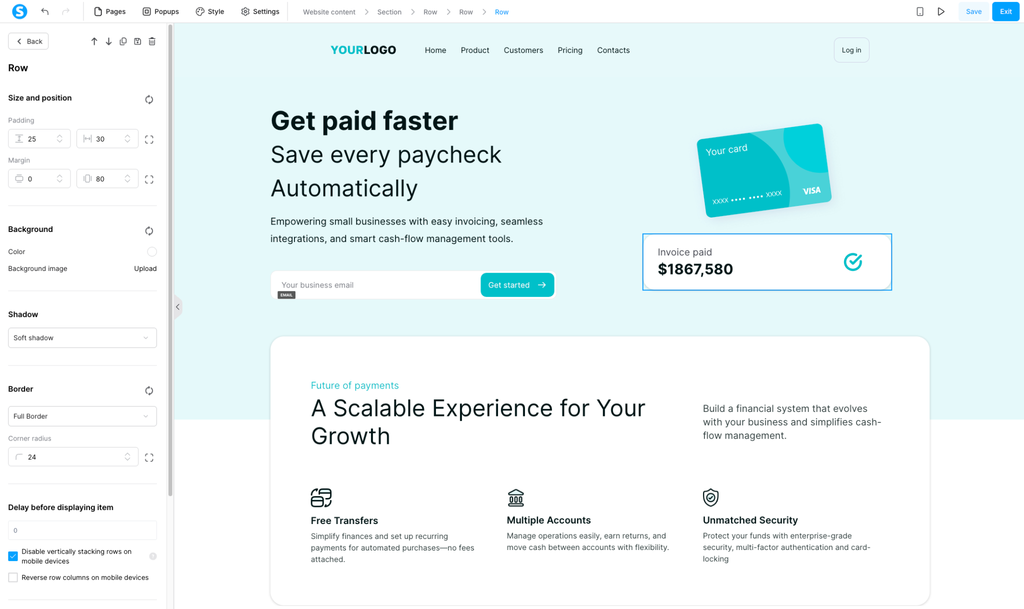
It feels closer to a modern page builder like Elementor. Not quite as powerful, but surprisingly close for an all-in-one marketing platform.
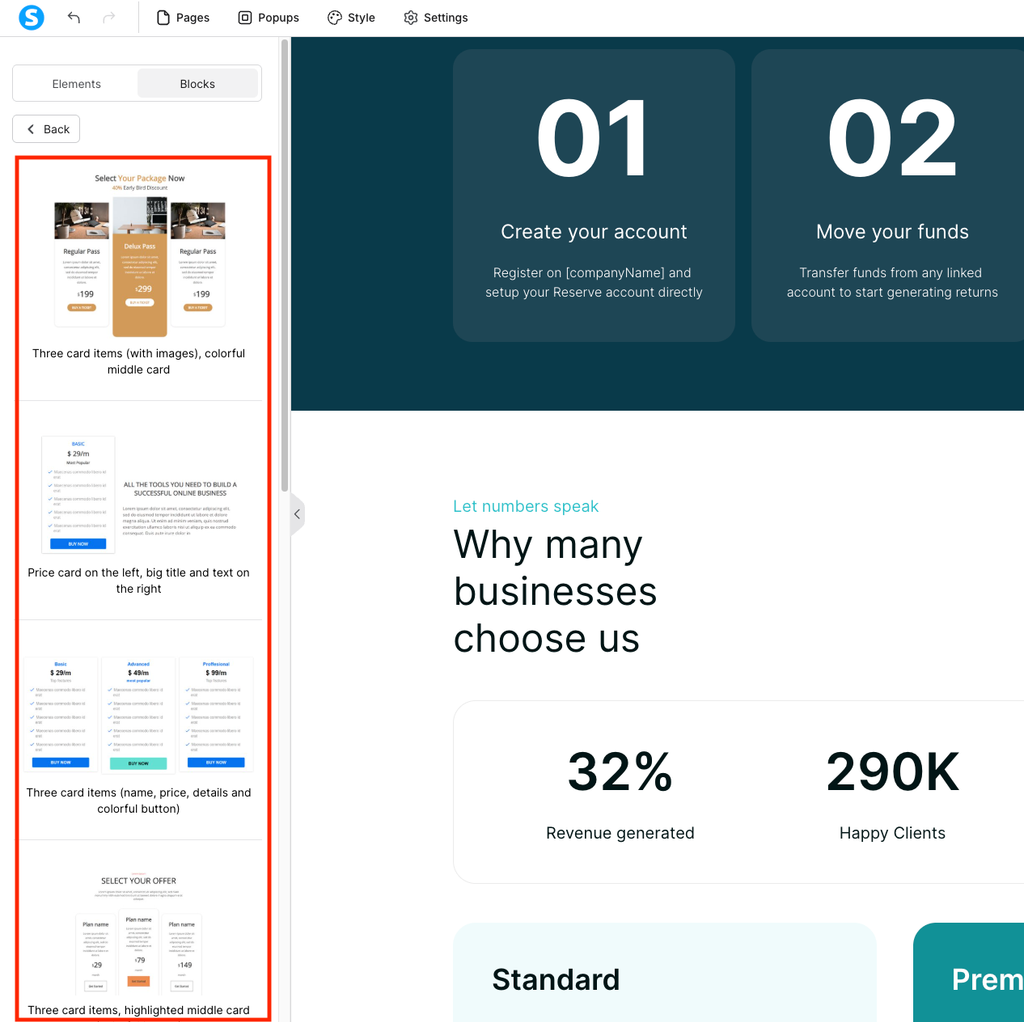
Systeme.io also has a good library of pre-built blocks. Instead of building every section from scratch, you can drop in things like optin forms, pricing cards, and other page sections, then customize them as you like.
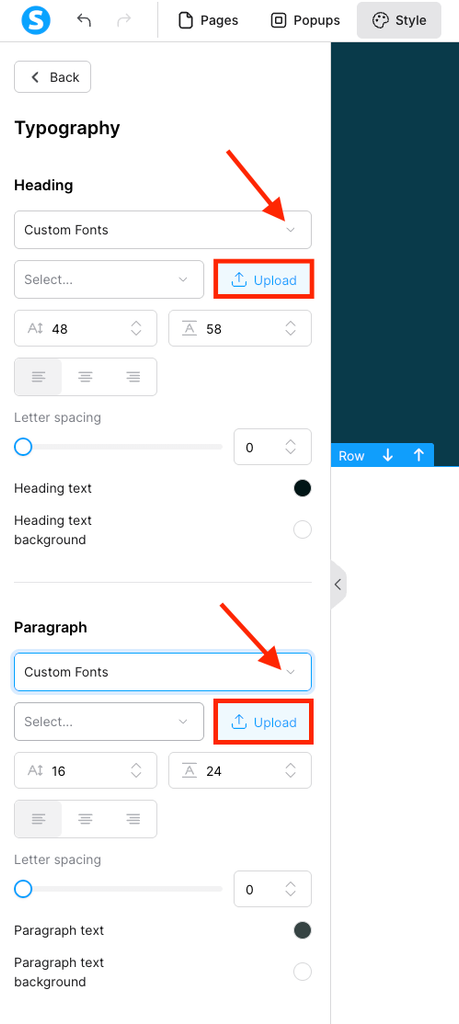
You also get more control over the site’s visual style. You can set your brand colors, add HTML and CSS, and choose from fonts such as Roboto, Lato, Open Sans, and Playfair, or upload your own custom fonts.
Kajabi’s builder feels more restrictive by comparison. You can change or add things like page blocks, spacing, padding, margins, background color and animations.

Unlike Systeme, you can’t freely move elements around the canvas as you like.
However, Kajabi does have a few tricks up its sleeve.
You can upload custom themes, buy themes from its marketplace, and use CSS and JavaScript to modify your site.
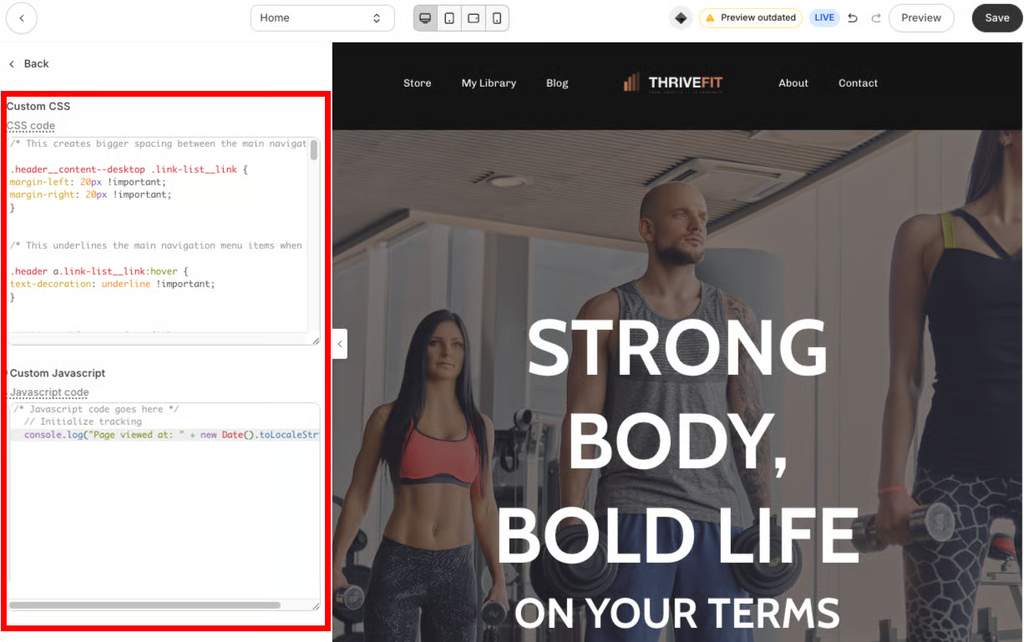
On its Higher-tier plans you’ll be able to view and modify your template code directories and corresponding files
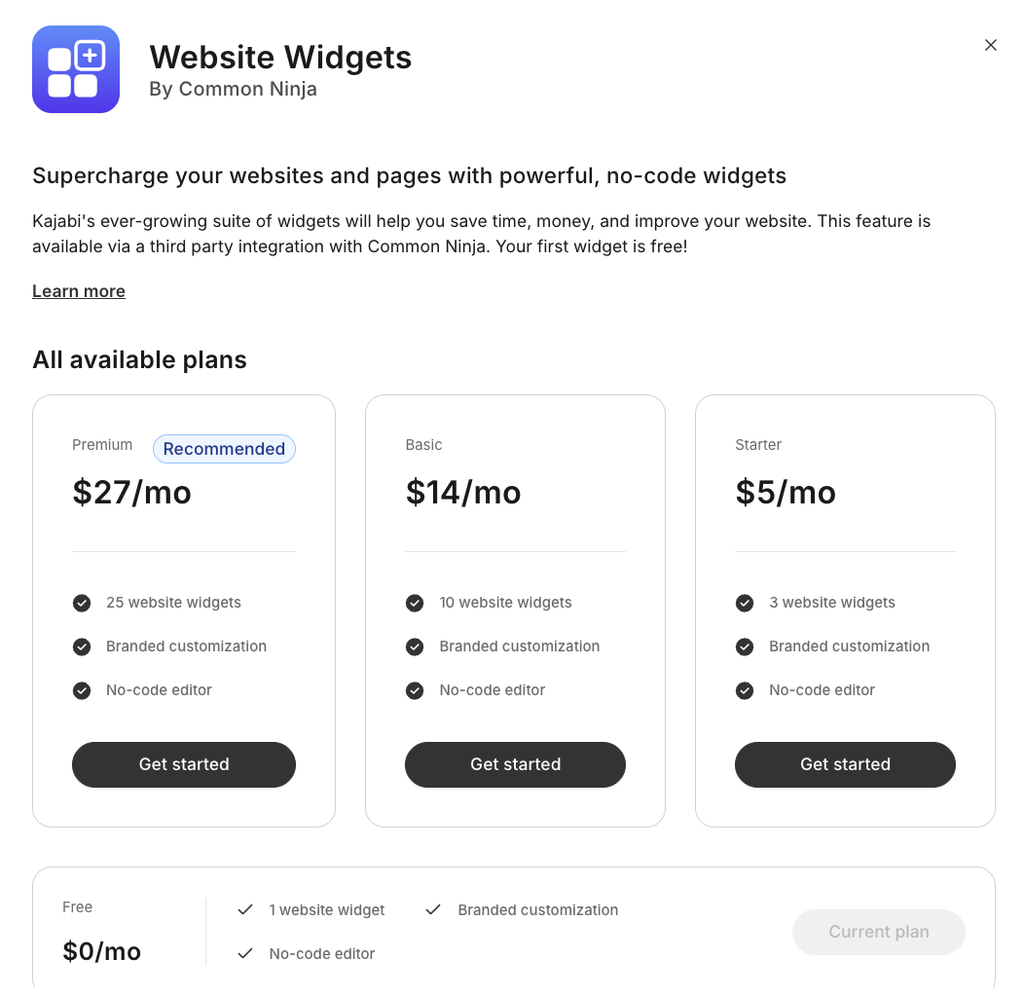
Kajabi also has custom widgets, which can give you reusable design components blocks. The catch is they’re a paid add-on.
Systeme has better funnels which includes A/B testing, deadline funnels, and per-step automation.
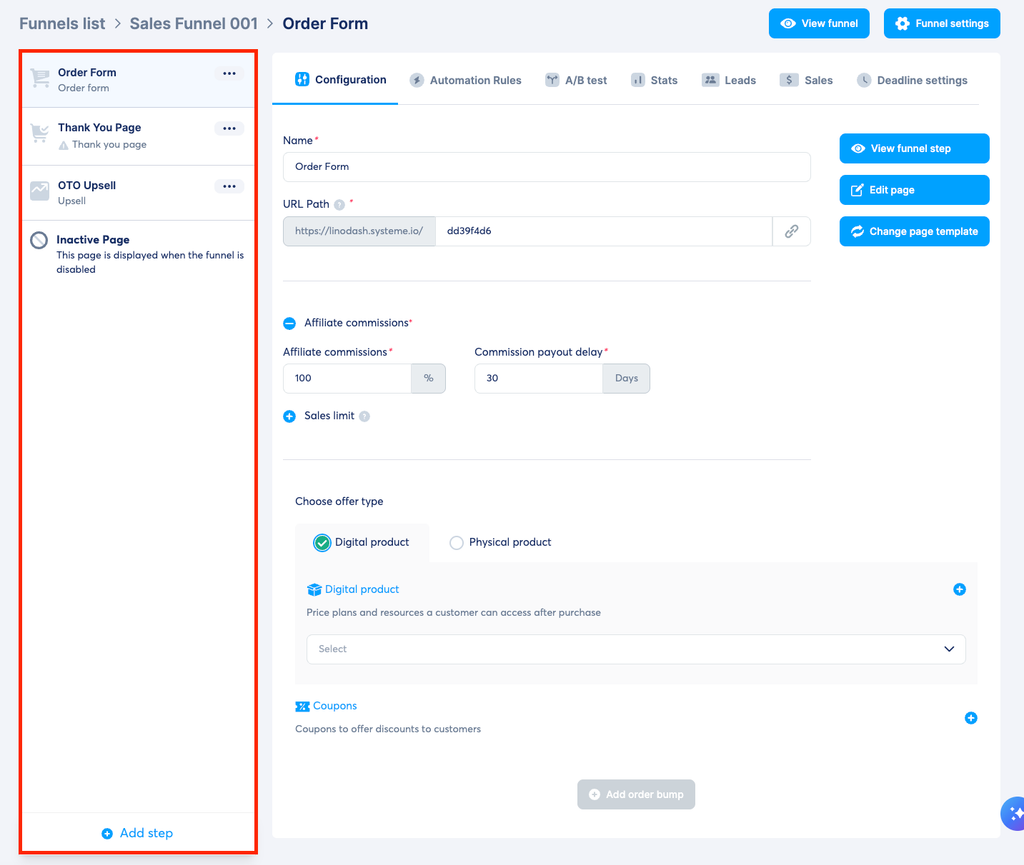
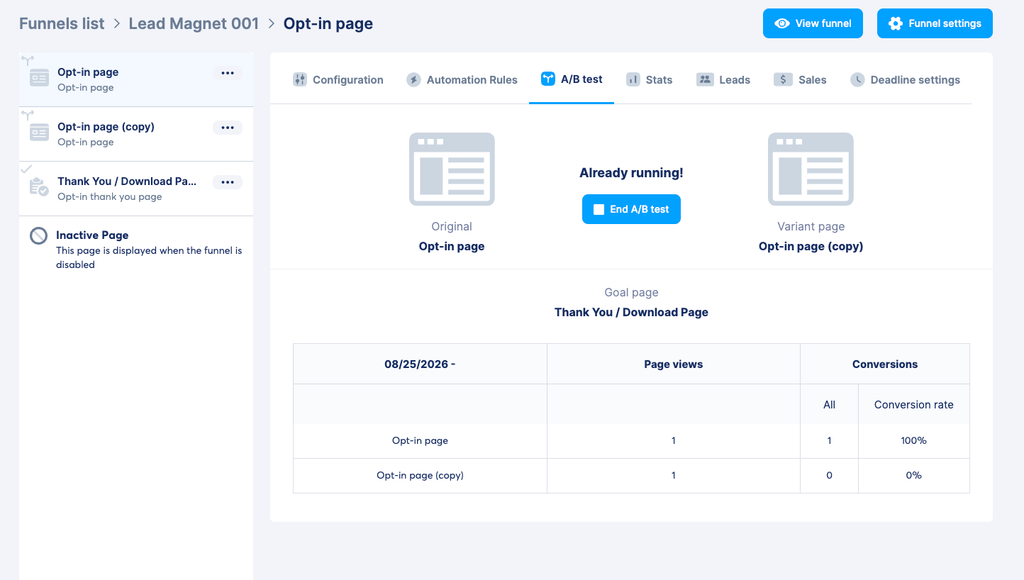
Systeme.io does not offer a visual funnel map in the same way Kajabi does. Instead, its funnel interface lists the individual steps in a sidebar, while the main panel gives you access to the selected step’s configuration, automation, reporting tools and other settings.
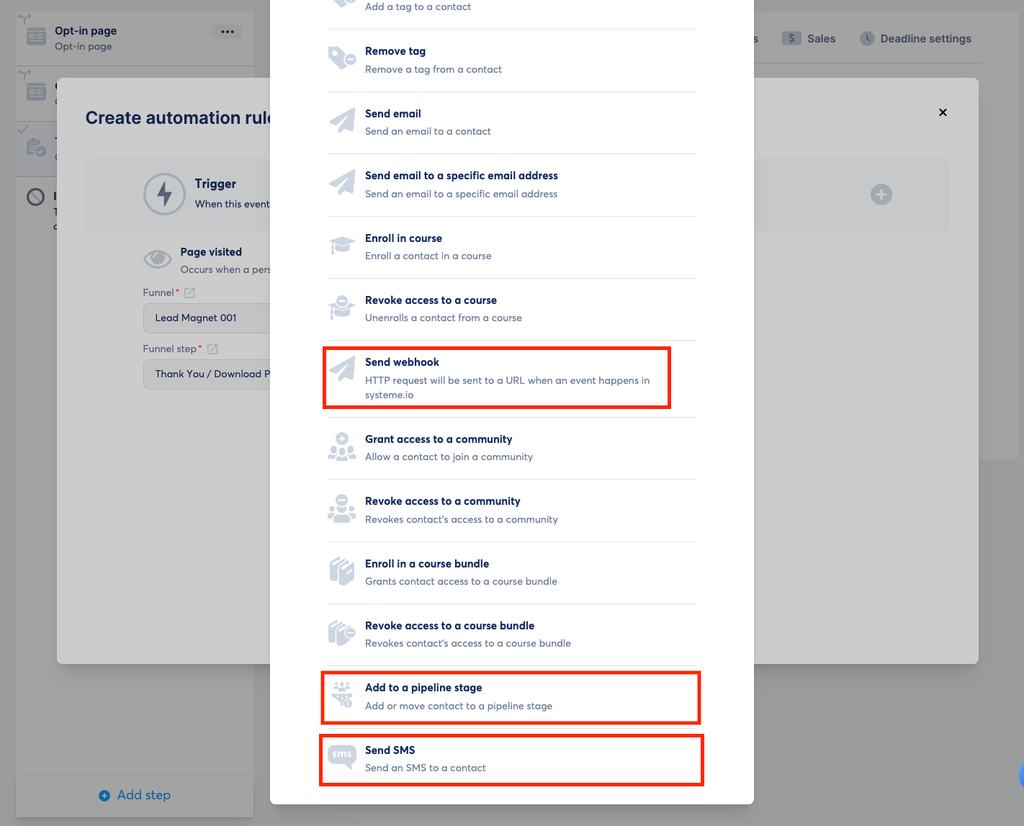
Each funnel step has its own automation and configuration options, allowing you to trigger actions such as sending a webhook request, moving a contact to a specific pipeline stage, or sending an SMS. This puts more operational control directly inside the funnel.
Systeme.io also has stronger built-in tools for optimizing funnel performance. You can A/B test different versions of a page to determine which one generates better results, allowing you to make funnel decisions based on actual conversion data.
On top of that, Systeme.io allows you to create time-limited offers by setting an expiration point for a funnel page or step and specifying where visitors should be redirected once the deadline passes.
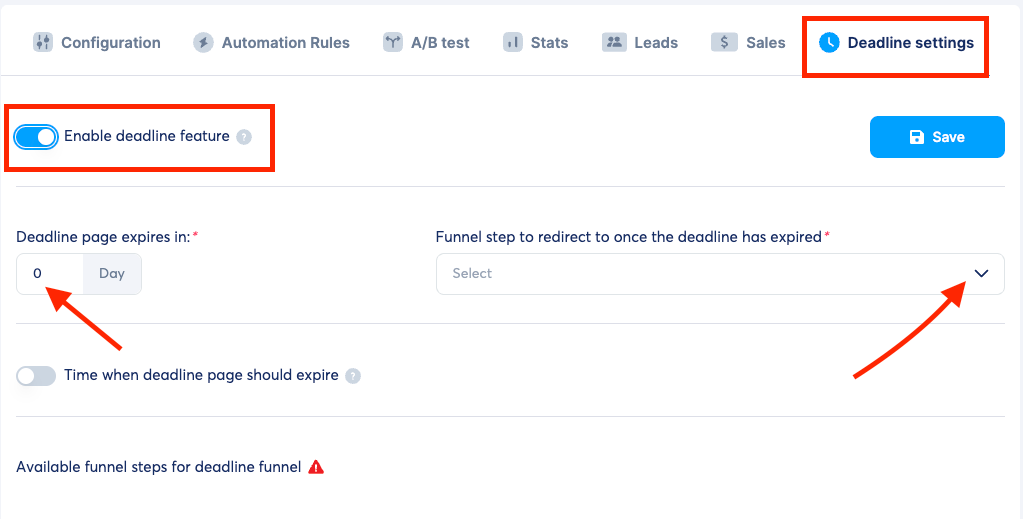
That way, you can effortlessly build funnels for launches, limited-time promotions, and evergreen campaigns without some persky automation setup.
Meanwhile, Kajabi funnel builder makes it much easier to lauch.
Which comes down to Funnel Blueprints.
These are pre-built, end-to-end funnel templates designed around use cases such as product launches, webinars, coaching, and sales campaigns.
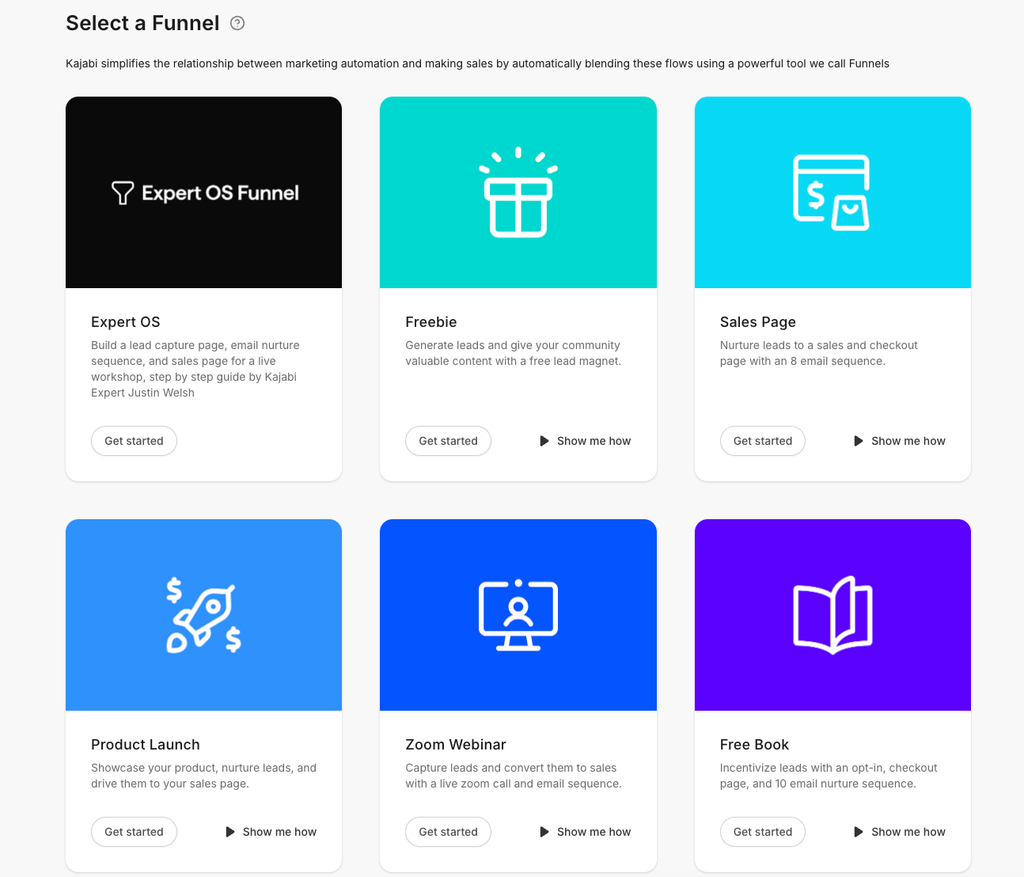
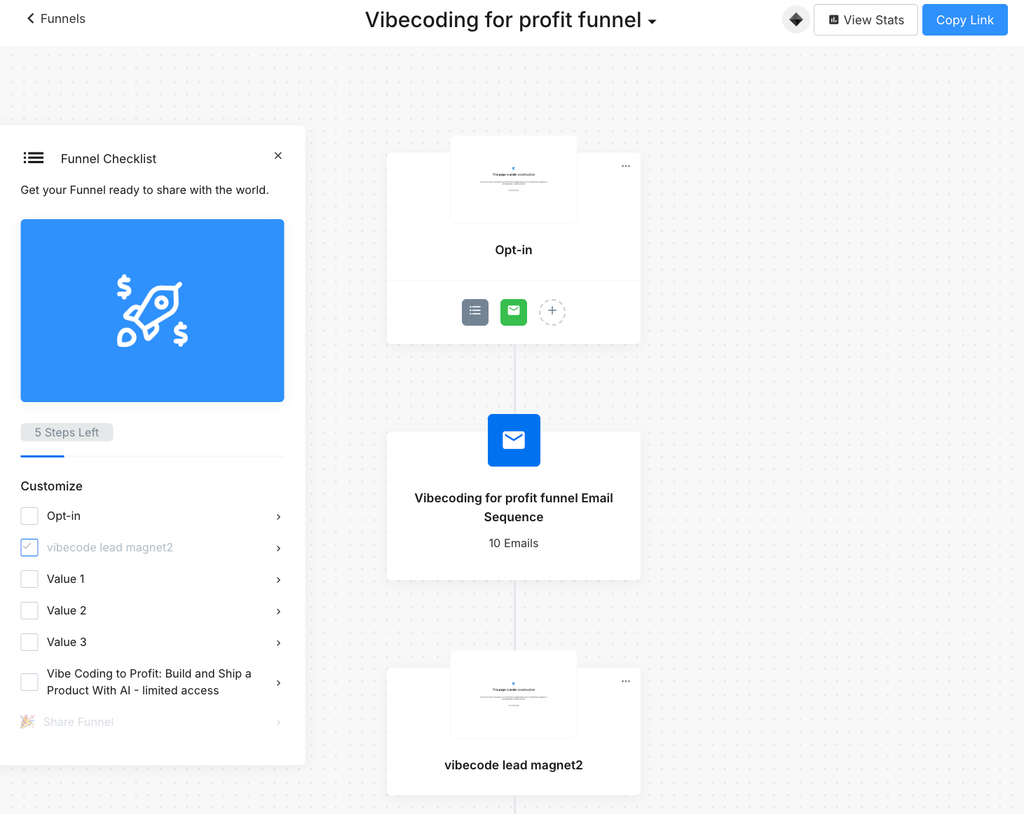
Instead of starting with a blank funnel and deciding which pages, forms, and emails you need, you can select a Blueprint that matches the campaign you want to run. Kajabi then provides a pre-built structure with the relevant pages and email sequences already connected.
That way, what you’ll need to do is customize the copy, branding, offers, and other elements without having to build the underlying funnel structure yourself.
This makes Blueprints particularly appealing if you are new to funnel building.
However, Kajabi isn’t completely restrictive, either. If you prefer to build your own funnel, you can use its visual builder to create and connect the different steps yourself.
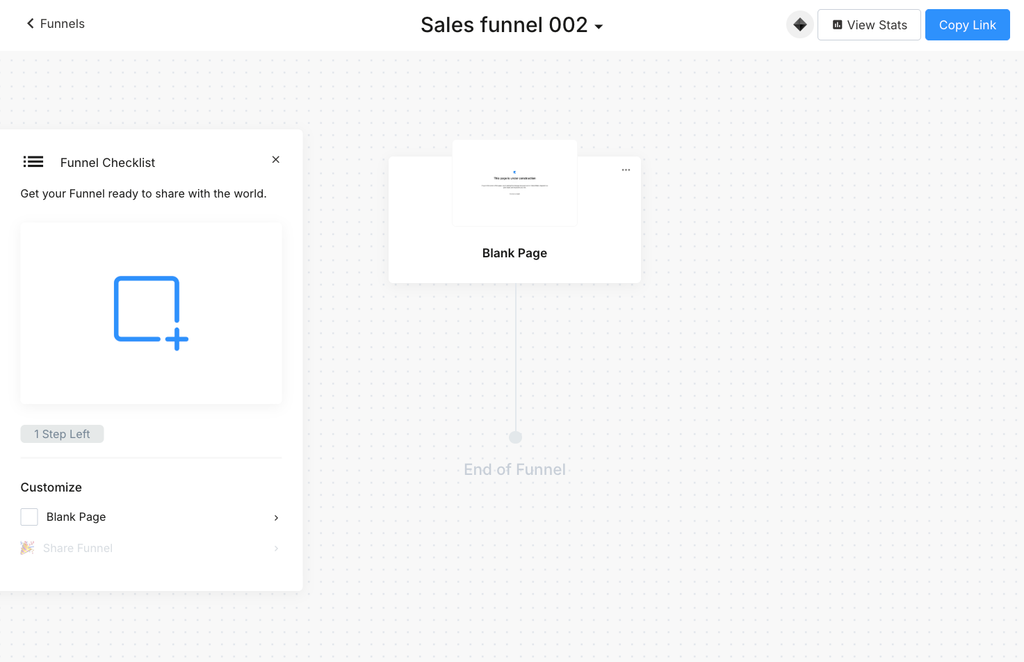
Like Systeme.io, Kajabi also lets you add automation using its “When” and “Then” logic though its automation is less granular and offers fewer funnel-specific actions than Systeme.io.
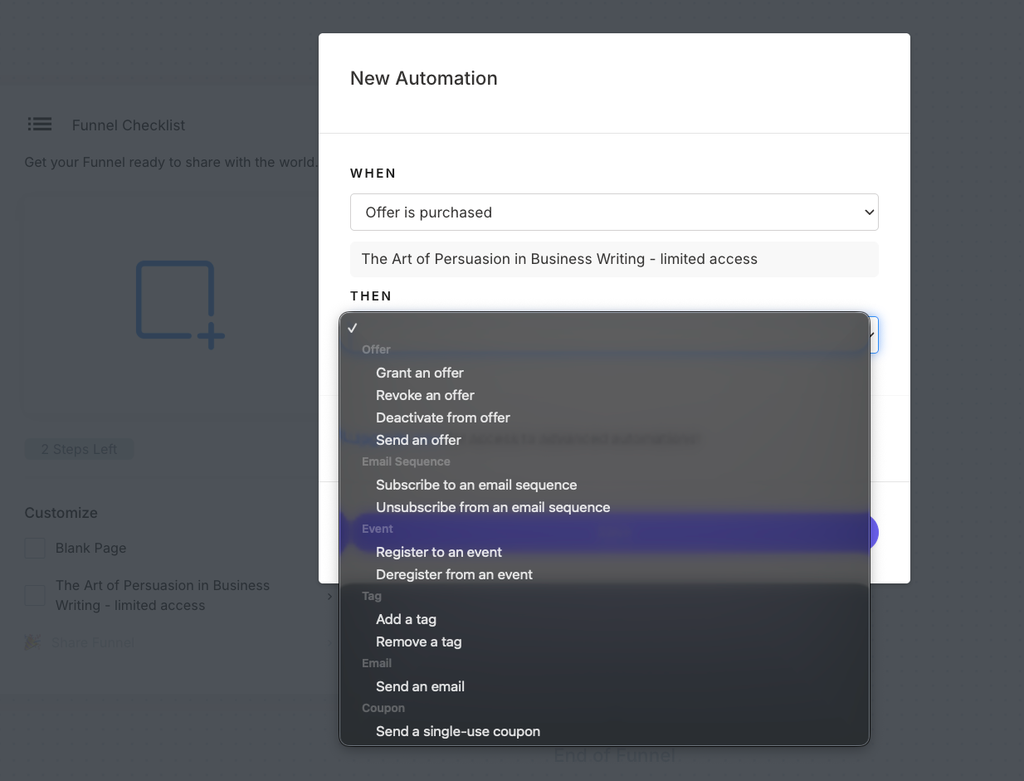
Also unlike Systeme, you get fewer built-in options for direct funnel experimentation and urgency-based campaigns. As it doesn’t provide the same native A/B testing and deadline-funnel capabilities within the funnel-building experience. You can still test individual pages through Kajabi’s page-building functionality, but that is different from having experimentation integrated directly into the funnel workflow.
Both offer essential email marketing tools but Kajabi offers advanced automation but at a premium price tag
Both Kajabi and Systeme.io offer buit-in email marketing tools so you won’t need to integrate third-party solutions like Kit, MailerLite or ActiveCampaign.
At a basic level, they are fairly evenly matched because each one lets you:
- send broadcasts and automated sequences,
- segment contacts with tags and fields
- A/B test emails
- trigger workflows based on actions such as purchases or form submissions
- create email templates with drag-and-drop builders
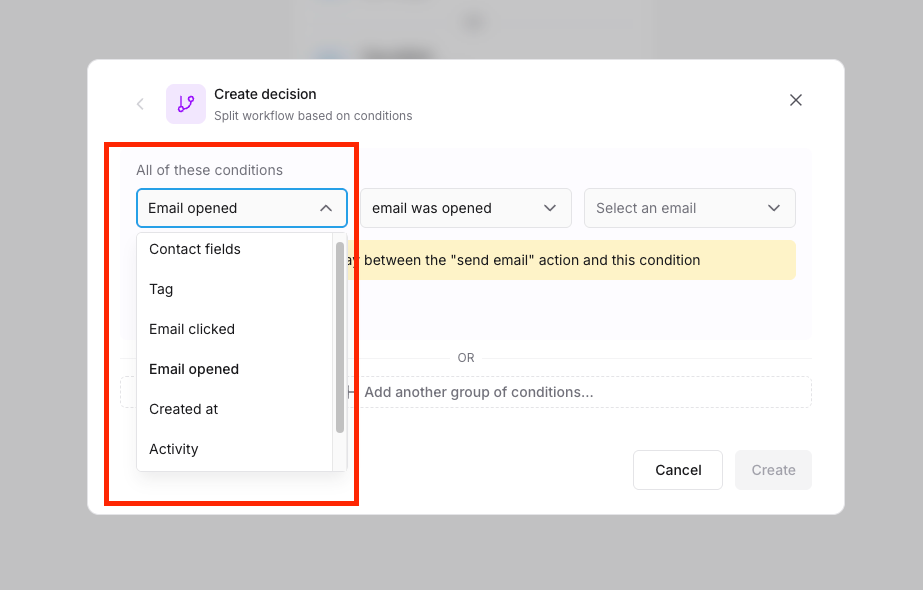
However, looking deep and analyzing both platforms I found that Kajabi gives you a much broader set of conditional filters through its Advanced Automations. It provides 56 predefined filters covering areas such as contact data, customer activity, email engagement, email activity, events, and tags and more. You can also combine conditions, create multiple entry points, and build workflows with branching logic that sends contacts down different paths based on their actions or attributes.
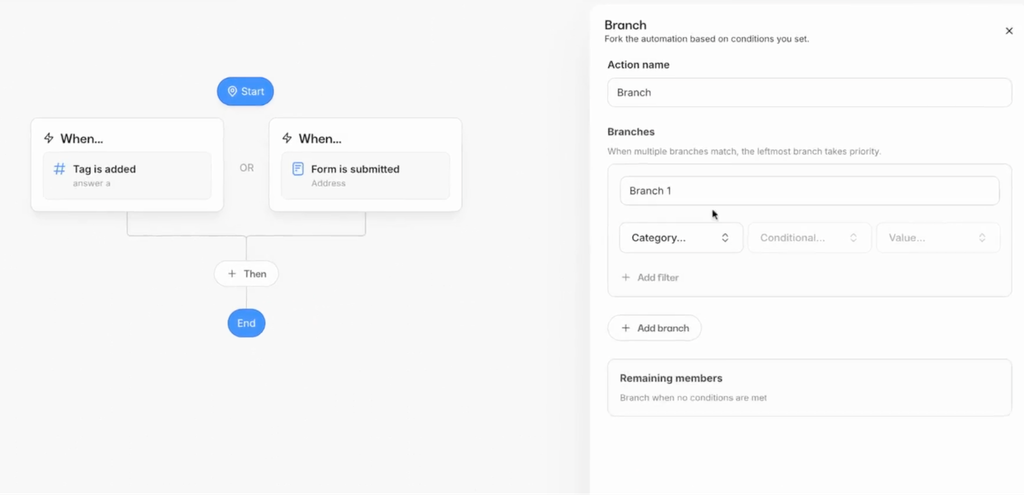
However, it’s important to know that this capability is only available via Kajabi’s Advanced Automation which you can only access on the Growth and Pro plans.
Systeme.io handles straightforward automations well, but its conditional logic is considerably more limited. Its workflows rely mainly on simple if this then that rules, with fewer conditions and branching options. This works for basic sequences, but becomes restrictive when you need to build more sophisticated, behavior-based email journeys.
Systeme.io does have one advantage though: its built-in pipeline. You can move leads through Kanban-style stages, giving you a visual overview of where each prospect is in the conversion journey.
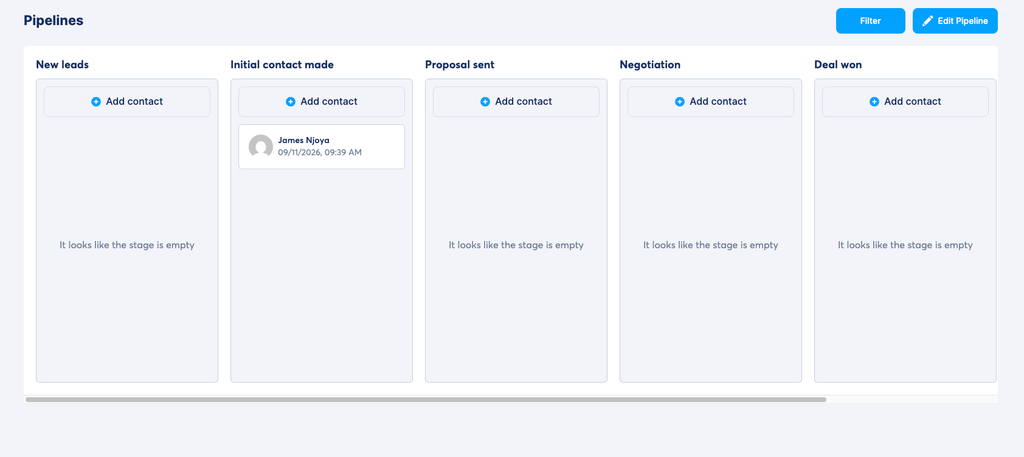
That can be useful for high-ticket coaching and consulting, allowing you to track prospects and personalize follow-up messages.
Systeme.io offers more payment flexibility
Both platforms have built-in checkouts, so you don’t need a separate shopping cart like ThriveCart to sell courses, memberships, or coaching packages. Both support one-time payments, payment plans, subscriptions, coupons, order bumps, and upsells.
However, Systeme gives you more ways to accept paymets. It supports over 7 payment gateways which includes Stripe, PayPal, Flutterwave, Razorpay, Mollie, GoCardless, Xendit, Mercado Pago, and SecureAndPay. It also supports cash on delivery for physical products.
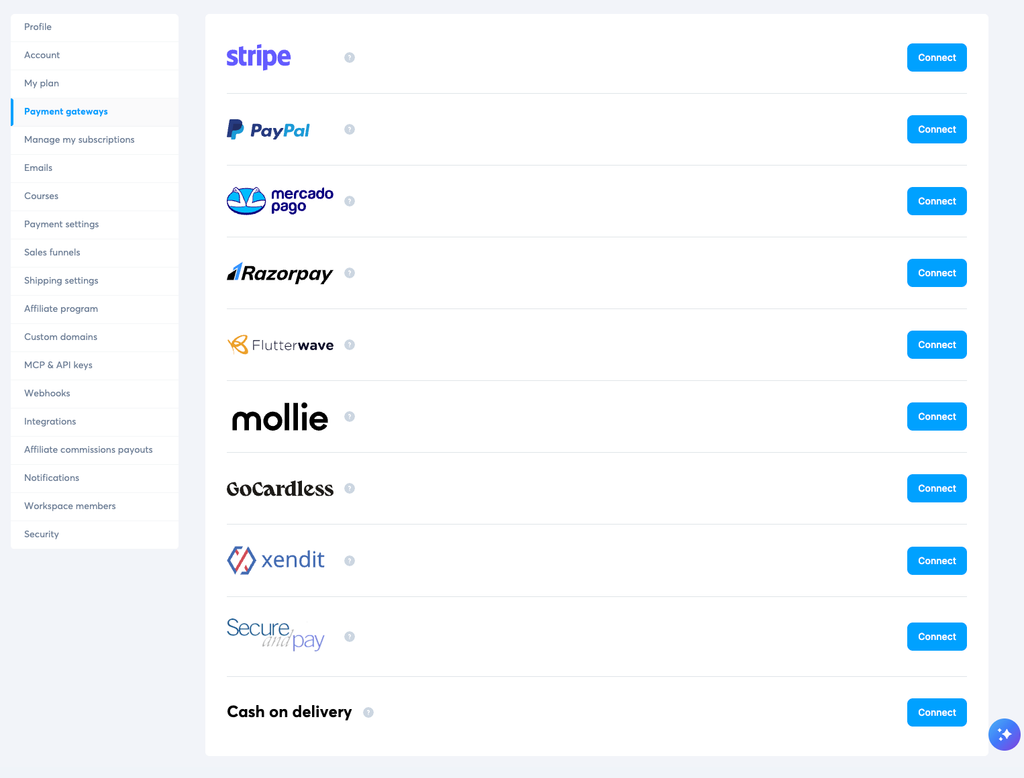
Kajabi, on the other hand, supports three: Kajabi Payments, Stripe, and PayPal. But Kajabi Payments is the better option when it’s available because it offers more payment methods, including Apple Pay, Google Pay, Afterpay, and Klarna.

The catch is, it’s limited to the US, Canada, UK, Australia, UAE, and parts of Europe. If you’re outside those markets, you’re generally back to Stripe or PayPal.
Systeme.io can sell physical products while Kajabi requires you to integrate a dedicated e-commerce tool like Shopify
Systeme offer native tools to sell physical products. You can add things like color and size variations, SKU, price, images, weight, stock count, product tax.
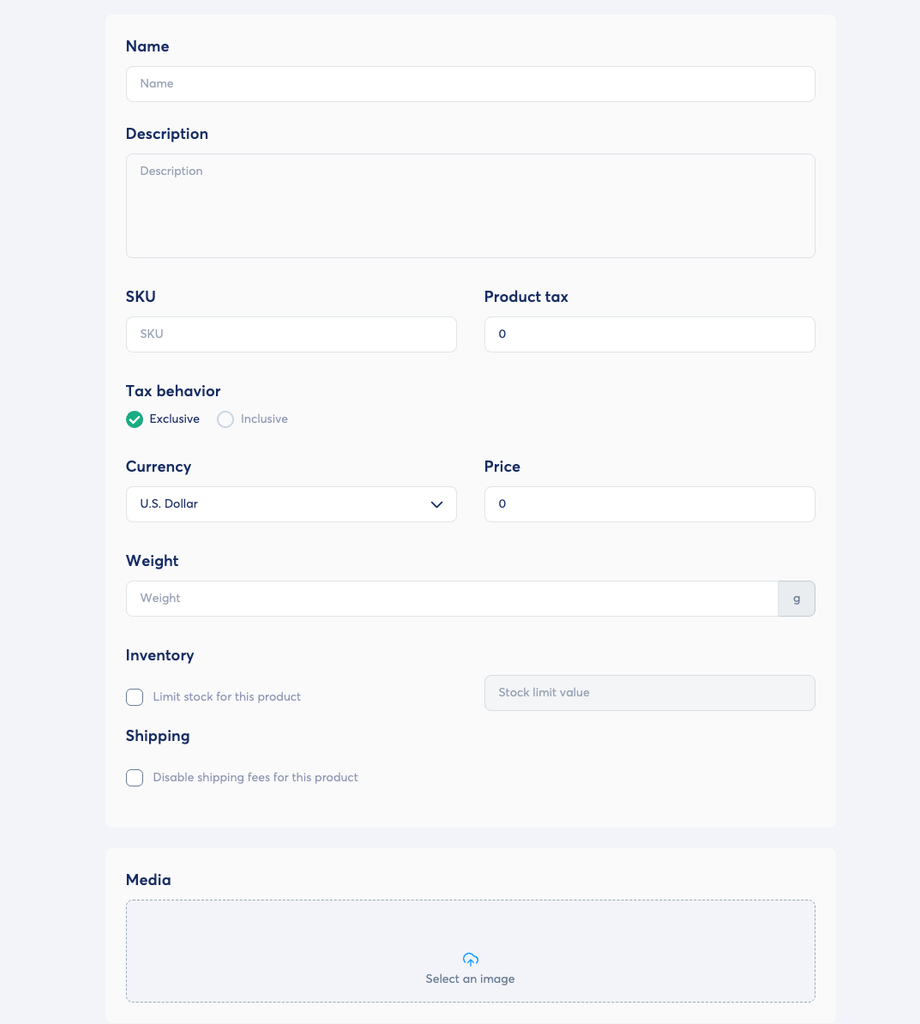
You can set shipping fees on the product, drop it into any funnel’s order form, and you can offer it as an order bump next to a course. A printed workbook, a book, a piece of merchandise: the buyer pays for all of it in one checkout, and you manage all of it in one place.
Meanwhile, Kajabi doesn’t offer built-in tools to sell physical products. As such you’ll need to integrate a third-party ecommerce platform like Shopify to handle the product, inventory, orders, and shipping..
Kajabi Pros and Cons
Pros
- Purpose-built course delivery with quizzes, assessments, cohort learning, live sessions, and 7 player themes
- Full native community with gamification, challenges, badges, and direct messaging
- Supports podcasts, newsletters, and coaching alongside courses and memberships
- Native iOS and Android student app; white-label Branded App on Pro plan
- Email marketing, funnels, and content delivery in one connected system with 20+ trigger types
- Creator Studio AI for content generation and video repurposing
- Strong support ecosystem: Kajabi University, live chat, active user community
- 0% transaction fees on Kajabi Payments
Cons
- January 2026 pricing restructure removed the entry plan and raised prices significantly
- No A/B testing on any plan
- Affiliate program locked behind the $199/month Growth plan
- Contact limits are tight on Basic (2,500)—easy to outgrow early
- No native webinar hosting
- No support for physical products
- Kajabi’s sequence builder is more linear and less flexible than Systeme.io’s visual workflow builder
Systeme.io Pros and Cons
Pros
- Genuinely useful free plan—no credit card, no time limit, 0% transaction fees
- Full stack at $97/month: unlimited contacts, funnels, courses, automations, emails
- A/B split testing on all plans including free
- Affiliate management on all plans including free
- Visual workflow builder with conditional branching—more flexible automation logic than Kajabi
- Evergreen webinar hosting on Webinar plan ($47/month)
- Supports physical and digital product sales
- Sub-accounts on all plans—each inherits the main plan’s limits at no extra cost
- 0% transaction fees on all plans
- Free migration service on paid plans
Cons
- Course builder is basic: right/wrong quizzes only, no certificates on lower plans, no cohort course type, limited player customization
- Community feature is thin—many users rely on external tools for serious community building
- No native student mobile app
- Page templates look dated and offer limited design flexibility
- Support quality is inconsistent—response times of 12–19 hours reported, some users describe generic responses rather than specific solutions
- No native podcast, newsletter, or coaching product types
- Analytics are limited compared to Kajabi
Kajabi vs Systeme: My final take
Both Kajabi and Systeme are fantastic all-in-one digital business platforms. But if you carefully look at what each offers you’ll see they serve different types of users.
Kajabi works well for knowledge entrepreneurs, creators and coaches. It has more refined teaching and student engagement tools. And on top of that, a solid marketing stack to help you market your digital business. But all this comes at a premium price tag making it one of the highly priced solutions out there.
Also see how Kajabi compares to other tools on my detailed guides:
Systeme, on ther hand, is a budget-friendly all-in-one online marketing software. It’s a great choice for small creators, beginners and solo digital businesses owners. It features nearly the same tech stack as Kajabi but at a much lower price tag. Though its course creation, online learning and community building tools aren’t that great, you’ll appreciate its comprehensive marketing toolset that makes selling much easier.
Top Kajabi and Systeme alternatives worth considering
Although both platforms are strong digital business tools, they’re also not ideal for everyone. Here are other alternatives to choose from depending on what you’re looking for.
Top alternatives for course creation and online learning
- Thinkific: No transaction fees, unlimited courses on all plans, stronger course builder than Systeme.io, and a page editor that handles basic landing page needs. A solid middle ground before committing to Kajabi.
- Teachable: Clean course delivery with 0% transaction fees on Builder plan and above, global tax compliance, and a much lower entry point than Kajabi. Pair it with a separate email tool when you’re ready to scale your marketing.
Top alternatives for community building, memberships and group learning
- Circle: best all-in-one online community software overall.
- Mighty Networks: The ideal solution for building high-engagement online learning communities.
For creators who want more marketing power:
- Kartra: All-in-one with a stronger funnel builder than Kajabi, native webinar hosting, advanced automation, and multi-level memberships.
- GoHighLevel: The right upgrade path if your business grows into needing CRM pipelines, SMS marketing, and multi-client management alongside course delivery.
